

The material decision determines almost everything else about your packaging. Cost. Print quality. Sustainability. Even how your product feels when the customer picks it up. This is a side by side breakdown of the eight most common packaging materials we use, what they cost, what they protect, and which industries pick which.
The eight materials you will actually choose between
Most packaging conversations start with eight substrates. Specialty materials like metallized films and biodegradable composites have their place, but for 95 percent of brand packaging, you are choosing between these.
- SBS bleached white paperboard
- Kraft natural brown paperboard
- Corrugated E-flute
- Corrugated B-flute
- Rigid greyboard chipboard
- CRB clay coated recycled back
- Duplex board
- Holographic board
The next sections compare them across the criteria that actually drive the decision.
SBS board
Solid Bleached Sulfate paperboard. Bright white surface. Highest print quality of any paperboard. Smooth tactile feel.
Available thicknesses: 12 point, 14 point, 16 point, 18 point, 20 point, 24 point.
Where it wins: Cosmetics, luxury goods, food packaging that needs vivid full color photography. It is also the default substrate for printed product boxes that need to carry sharp graphics on a retail shelf.
Where it loses: Sustainability messaging. SBS contains 0 to 30 percent recycled content, lower than other options. It is recyclable curbside but does not signal eco commitment on its own.
Typical use: Cosmetic outer cartons at 18 to 24 point. Food cartons at 14 to 18 point with food safe inks.
Price tier: Premium. About 20 to 35 percent more per unit than kraft or CRB at the same thickness.
Kraft paperboard
Unbleached natural brown paperboard. Recycled content from 80 to 100 percent. FSC certified options widely available.
Available thicknesses: 14 point, 16 point, 18 point, 24 point.
Where it wins: Eco brands, artisan and natural product positioning, craft food and beverage.
Where it loses: Color reproduction. CMYK colors look muted on the brown background. White underprint is often needed to keep colors bright, which adds cost.
Typical use: Cosmetic and supplement boxes that want a natural feel. Bakery and coffee cartons. Mailer boxes for sustainable brands. See the material in a finished kraft box build before you commit to it.
Price tier: Mid. Similar to or slightly less than CRB.
Corrugated E-flute
Thin corrugated board at about 3 mm thickness. Excellent crush resistance for the weight. The default for printed mailer boxes.
Where it wins: Custom printed mailer boxes, lightweight ecommerce shipping under 5 lbs, fragile items that need cushioning.
Where it loses: Stacking strength. Heavy products and pallet stacking need B-flute or heavier.
Typical use: Mailer boxes for cosmetics, apparel, jewelry, supplements, light tech accessories.
Price tier: Mid. About 30 percent less per unit than rigid options at the same dimensions.
Corrugated B-flute
Standard corrugated at about 3.5 mm thickness. Heavier than E-flute. Strong stacking and crush resistance.
Where it wins: Shipping cartons, mailer boxes for heavy items, retail ready packaging that needs to support stacking on the shelf.
Where it loses: Print quality. The thicker flute shows through fine printing more than E-flute does. Best with one to three spot colors rather than full color photography. See the full range of printing and finishing options available on corrugated stock.
Typical use: Shipping cartons for wholesale and ecommerce. Mailer boxes for products 5 to 15 lbs. Display cartons for the retail shelf.
Price tier: Low to mid. Often the most economical option for shipping use.
Rigid greyboard chipboard
Dense pressed paperboard at 1.5 mm, 2 mm, 3 mm, or 4 mm thickness. The structural core of premium rigid setup boxes.
Where it wins: Luxury packaging, premium electronics, gift sets, anything that needs the look and weight of a hardback book.
Where it loses: Cost. Rigid boxes are 2 to 4 times the cost of folding cartons at the same outer dimensions because of material weight and assembly labor.
Typical use: Soft touch rigid boxes for beauty launches. Magnetic closure boxes for jewelry. Tech accessory boxes with foam inserts.
Price tier: Premium. The most expensive structural option for printed packaging.
CRB clay coated recycled back
Recycled paperboard with a smooth clay coated white front and a grey or brown back. Excellent print quality on the front. 80 to 100 percent recycled content.
Available thicknesses: 14 point, 16 point, 18 point, 20 point, 24 point.
Where it wins: Sustainable brand positioning with full color printing. Affordable folding cartons. Volume retail packaging.
Where it loses: The grey back side limits inside print quality. The structure is slightly softer than SBS at the same thickness.
Typical use: Folding cartons for grocery, supplements, household goods. Cereal boxes. Frozen food cartons.
Price tier: Mid. Similar to kraft, less than SBS.
Duplex board
White on one side, grey on the other. Mid weight paperboard. The most cost effective option for short run printed packaging.
Available thicknesses: 14 point, 16 point, 18 point, 20 point.
Where it wins: Tight budgets, very high volume runs, retail packaging where unit cost matters more than premium feel.
Where it loses: Print quality compared to SBS. Premium positioning.
Typical use: Generic retail cartons. Industrial packaging. Brands focused on value pricing.
Price tier: Low. Often the cheapest paperboard option for printed packaging.
Holographic board
Paperboard with a metallic reflective surface coating. Used for premium and seasonal packaging that needs to catch the eye.
Where it wins: Premium product launches, gift sets, seasonal packaging, anything that needs to stand out on a shelf packed with competitors.
Where it loses: Cost. Recyclability. Color matching, since the metallic base alters how printed colors appear.
Typical use: Holiday gift packaging. Limited edition product launches. Premium confectionery.
Price tier: Premium. About 30 to 50 percent more than SBS at the same thickness.
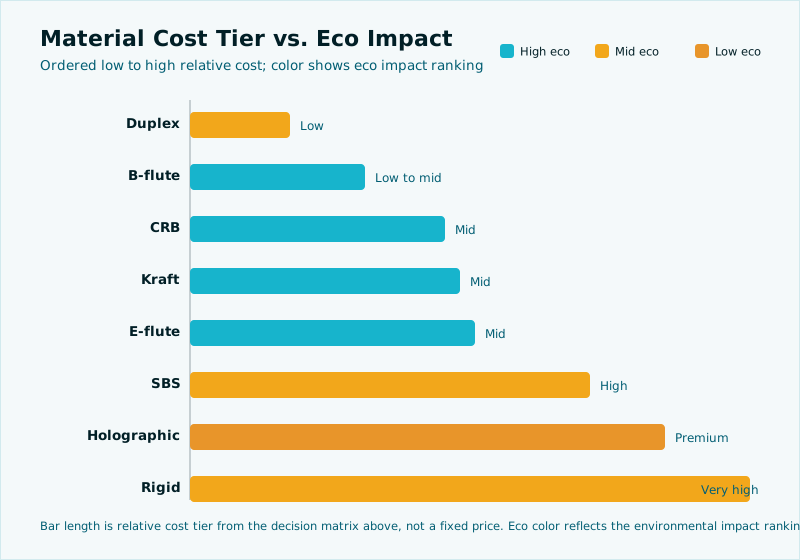
Decision matrix
| Material | Cost | Print Quality | Strength | Eco | Best Industry |
|---|---|---|---|---|---|
| SBS | High | Excellent | Mid | Mid | Beauty, food |
| Kraft | Mid | Mid | Mid | High | Eco brands |
| E-flute | Mid | Good | Good | High | Ecommerce mailers |
| B-flute | Low-Mid | Mid | Excellent | High | Shipping cartons |
| Rigid | Very High | Excellent | Excellent | Mid | Luxury, electronics |
| CRB | Mid | Good | Good | High | Sustainable retail |
| Duplex | Low | Mid | Mid | Mid | Value retail |
| Holographic | High | Mid | Mid | Low | Seasonal, premium |
Environmental impact ranked
For sustainability minded brands, here is the relative environmental impact from lowest to highest:
- Kraft FSC certified
- CRB recycled
- Corrugated FSC certified
- SBS FSC certified
- Standard SBS
- Duplex
- Rigid chipboard
- Holographic
Recycled content and FSC certification matter more than substrate type. A kraft box made from virgin fiber has a larger footprint than an SBS box made from FSC certified fiber with 30 percent recycled content. Always ask for the FSC chain of custody documentation if sustainability is part of your story. For a deeper walkthrough of the trade-offs between recycled, FSC, and compostable options, see our eco-friendly packaging materials guide.
How to choose
Pick based on the three questions that actually move the needle.
1. What is your unit price point? Below 25 dollars retail: folding cartons in CRB or kraft. 25 to 75 dollars: SBS folding cartons. Above 75 dollars: consider rigid boxes for the perceived value lift.
2. What is your shipping context? Direct to consumer shipping: corrugated mailer boxes. Wholesale or retail shipping: B-flute shipping cartons. In-store retail only: folding cartons.
3. What is your sustainability story? If it is central to your brand: kraft or CRB with FSC certification. If it is a secondary positioning: any material with FSC certification. If it is not a core value: SBS or rigid as fits the unit price.
Common questions about choosing a material
Which packaging material is food safe or FDA compliant? SBS, kraft, and CRB can all be produced with food-contact-safe coatings and inks, which is why they show up across cosmetic, supplement, bakery, and frozen food cartons in the sections above. What changes is the coating spec, not the base substrate: dry goods generally need less protection than anything with direct fat or moisture contact. Confirm the exact food-contact certification your product category requires when you request your quote, since the right spec depends on what the box actually touches.
What printing method works best on kraft paperboard versus SBS? SBS takes full color offset or digital litho printing cleanly because the bright white base needs no correction, so photography and fine gradients reproduce accurately. Kraft's brown background mutes CMYK color and usually needs a white underprint to keep brand colors true, which adds a step to the print run. If your design leans on the natural kraft color as part of the look, keep the palette to one or two spot colors instead of fighting the substrate. See our printing methods breakdown for how each method performs across substrates.
How much does a rigid chipboard box cost compared to a folding carton at the same quantity? Rigid setup boxes typically run 2 to 4 times the per-unit cost of a folding carton made from SBS, kraft, or CRB at the same outer dimensions. The gap comes from material weight and hand assembly labor, not the quantity you order, so the multiple holds roughly steady whether you are ordering 100 units or 2,000. Send us your dimensions and target quantity for an exact number.
Get a material recommendation
Still not sure? Send us your product details and we will recommend the material that fits your category, budget, and brand story. Free with every quote.


