Sustainable packaging used to be a positioning move. In 2026, it is a procurement requirement. State laws, retailer mandates, and consumer scrutiny have all caught up to the rhetoric. Brands that treated sustainability as marketing now have to back it with verifiable supply chain claims. Brands that genuinely lead on sustainability now have a real competitive advantage.
This guide breaks down where the field actually is, what claims hold up, and what brands need to do to keep up. For material-by-material specifics on recycled content, FSC, and compostable options, see our eco-friendly packaging materials guide.
The current state of regulation
A handful of US states now have Extended Producer Responsibility (EPR) laws on the books that affect packaging. California, Oregon, Colorado, Maine, and Minnesota all require producers to fund recycling infrastructure or pay fees based on the volume and recyclability of the packaging they ship into the state.
The practical effect is that non-recyclable packaging now carries a direct cost premium in those states. Plastic windows, mixed material laminates, and metallized films attract fees. Recyclable paperboard and corrugated do not.
For brands that ship nationally, the rational move is to design for the most restrictive state and ship that everywhere. The cost of compliance is higher per unit than continuing to ship plastic-heavy packaging, but the cost of fragmented packaging by state is higher still.
FSC certification
FSC stands for Forest Stewardship Council. It is the most recognized certification for sustainably managed forests. Certified products carry chain of custody documentation that traces fiber back to the certified forest.
For paperboard and corrugated packaging, FSC certification is the most credible sustainability signal. Customers recognize the logo. Retailers ask for the documentation. See the full range of certified and recycled substrate options on our materials guide.
FSC certified materials typically cost 5 to 12 percent more than non-certified equivalents. For brands building on sustainability, the cost is worth it. For brands that mention sustainability casually, the cost is hard to justify.
Recycled content
Post consumer recycled (PCR) content refers to fiber that has been used by a consumer, recycled, and processed back into new paperboard or corrugated. Pre consumer recycled refers to fiber recovered from manufacturing scrap.
By substrate:
- Kraft paperboard is typically 80 to 100 percent recycled
- CRB is typically 80 to 100 percent recycled
- Corrugated B-flute and C-flute is typically 50 to 100 percent recycled
- SBS is typically 0 to 30 percent recycled
Brands that want maximum recycled content should specify kraft, CRB, or recycled corrugated. The full breakdown of how these stack up lives in our packaging materials comparison. SBS has a higher virgin fiber content because the bleaching process favors virgin pulp.
If your customer base cares about recycled content specifically, state the exact percentage on the box: "80 percent post consumer recycled fiber." Specificity creates trust.
Soy based inks
Standard packaging inks contain petroleum derived solvents. Soy based inks substitute soybean oil for those solvents, reducing volatile organic compound emissions and improving recyclability of the printed material.
Soy based inks cost about 5 to 8 percent more than standard inks. They reproduce color comparably for most CMYK and Pantone applications. They are not a perfect substitute for every spot color but they cover 95 percent of commercial print needs.
For brands building on sustainability, soy based inks pair naturally with FSC certified substrates and recyclable structural design. See the full range of printing and finishing options for sustainable specs.
Compostable options
Industrially compostable packaging breaks down within 90 to 180 days in commercial composting facilities. Home compostable packaging breaks down within 6 to 12 months in backyard compost.
For packaging, the most common compostable options are:
- Uncoated kraft paperboard is industrially compostable
- PLA coated paperboard is industrially compostable with moisture resistance
- PHA coated paperboard is home compostable with moisture resistance
- Mushroom packaging (mycelium based void fill) is home compostable
Compostable packaging adds 15 to 40 percent to per unit cost depending on the option. It is most appropriate for brands where compostability is a core brand value, not a casual claim.
The caveat: industrial composting infrastructure is limited in the US. A package that is industrially compostable in theory often ends up in landfill in practice because the customer does not have access to a composting facility. Recyclability is often a more practically sustainable choice than compostability.
Plastic reduction
The biggest single lever for sustainable packaging is plastic reduction. Plastic windows, plastic laminate, plastic shrink wrap, plastic tape, and plastic void fill all add carbon footprint and reduce recyclability.
Specific substitutes:
- Plastic windows become die cut openings with no film, or PLA film if a window box requires one
- Plastic laminate becomes aqueous coating for shelf protection
- Plastic shrink wrap becomes paper banding or tucked-flap closure
- Plastic tape becomes water activated kraft tape
- Plastic void fill becomes crumpled kraft or molded pulp
Each substitute is available at competitive cost. The bottleneck is usually internal procurement habit, not material cost.
What consumers actually expect
Consumer research on sustainable packaging varies widely by methodology and category, and any specific percentage quoted without a named, current source deserves skepticism. What holds up across most credible studies is the general direction, not a precise number: a meaningful share of US consumers say they prefer sustainable packaging when price and quality are otherwise equal, and a smaller share will pay a modest premium for it, concentrated in premium and personal-care categories rather than commodity goods.
The takeaway: sustainability functions as a tie breaker and a premium product justifier more often than it functions as the primary purchase driver. For brands competing on price, sustainability claims are a defensive move that prevents losing a comparison shopper. For brands competing on premium positioning, sustainability claims can earn real margin. Either way, back the claim with a documented supplier spec rather than a statistic pulled from an uncited survey.
What to put on the box
The packaging itself should communicate the sustainability story specifically. Vague claims like "eco friendly" or "made with care for the planet" generate skepticism. Specific claims generate trust.
Good claims:
- "FSC certified paperboard" with the FSC logo
- "80 percent post consumer recycled content" with the exact percentage
- "100 percent recyclable curbside" with the chasing arrows symbol, which applies by default to corrugated mailer boxes without any special claim needed
- "Printed with soy based inks" as a small footer claim
Avoid:
- "Eco friendly" with no specifics
- "Sustainable" without backing
- "Biodegradable" if the product is going to landfill
- "Compostable" without specifying industrial or home
Greenwashing risks
The Federal Trade Commission's Green Guides set the standard for environmental marketing claims in the US. Vague claims without substantiation can trigger FTC action. State attorneys general have also become more active in pursuing greenwashing claims.
The risk is bigger for brands that scale rapidly. A claim that flies under the radar at 10,000 customers might attract attention at 1 million. Better to make modest, specific, defensible claims from the start.
The path forward for most brands
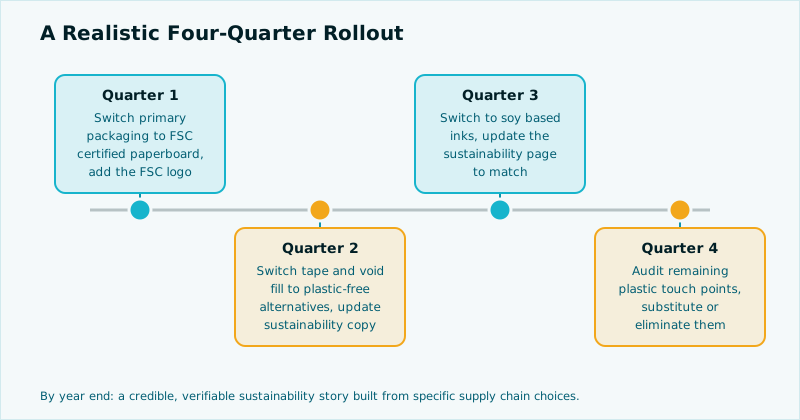
Most brands cannot become fully sustainable overnight. The realistic path is incremental.
Quarter one: Switch primary packaging to FSC certified paperboard. Add the FSC logo to the box.
Quarter two: Switch tape and void fill to plastic-free alternatives. Update sustainability copy on the box.
Quarter three: Switch to soy based inks. Update sustainability page on website to reflect the changes.
Quarter four: Audit remaining plastic touch points (poly mailers, shrink wrap, hang tabs) and substitute or eliminate.
By the end of the year, the brand has a credible sustainability story backed by specific supply chain choices that can be verified by any reasonable customer or regulator.
What it costs
A realistic sustainability upgrade across primary packaging, tape, and void fill costs about 10 to 18 percent more per unit than the standard alternative. Brands that recoup the cost through premium positioning earn the margin back. Brands that absorb the cost see it offset by reduced regulatory exposure, improved retailer access, and improved customer retention over time.
Common questions about sustainable packaging trends
What is the actual cost difference between recycled-content corrugated and virgin corrugated? In most cases there is little to none. Recycled-content corrugated is the dominant supply in the US, with recovery rates consistently above 90 percent, so it typically prices at or near parity with virgin board. A premium tends to appear only when a project needs a higher strength (ECT) rating than standard recycled board can deliver, which is a strength issue, not a recycled-content issue.
Are mono-material boxes (no plastic window) more recyclable than boxes with a laminated window? Yes, meaningfully. A laminated plastic window bonds two material types together in a way most recycling facilities cannot separate, so the whole box risks rejection at the mill. A die-cut opening with no film, or a PET window designed to be peeled off before recycling, keeps the paperboard stream clean and recyclable. This is the same mono-material principle behind the plastic reduction substitutes above.
How do I get FSC chain of custody documentation from my packaging supplier? Ask directly: a supplier offering FSC certified board should be able to provide a chain of custody certificate number tied to that specific order, not just a general claim that they "carry FSC options." Request the documentation at the quote stage so it is confirmed before production, not after the box ships. If a supplier cannot produce a certificate number on request, treat the FSC claim as unverified.
Get a sustainable packaging quote
For the fundamentals of specifying custom packaging beyond sustainability, start with our custom packaging guide. Send us your current packaging spec and get a free quote. We will quote you sustainable alternatives across substrate, ink, and finishing and show you exactly where the cost premium sits. Free with every quote.