Two box formats dominate the premium end of custom packaging, and they serve very different purposes. Rigid setup boxes signal luxury before the customer even touches them. Mailer boxes deliver a branded moment at the doorstep for a fraction of the cost. Choosing between them is not simply a budget decision. It is a question of what your packaging needs to accomplish, where it lives in your customer's journey, and what your product actually requires.
This guide breaks down both formats across every dimension that matters so you can spec the right structure with confidence.
What is a rigid setup box?
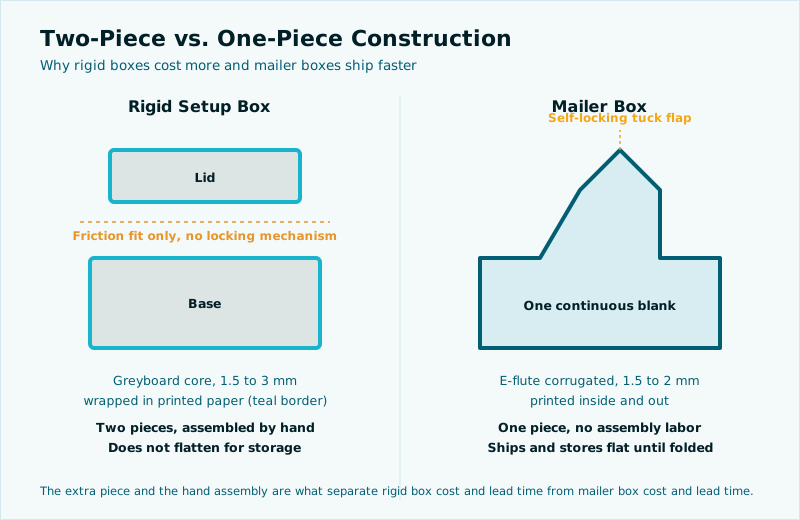
A rigid setup box is a non-collapsible box made from thick greyboard (typically 1.5 mm to 3 mm) wrapped in printed paper or specialty material. The lid and base are two separate pieces. They do not fold flat. They do not lock. They simply rest together with a friction fit that creates that satisfying, slow-open experience you feel with premium electronics, jewelry, and high-end cosmetics.
The construction is labor-intensive compared to corrugated formats. Greyboard is cut and shaped, then wrapped with a printed sheet bonded by adhesive. That process is mostly done by hand, which is why rigid boxes cost more per unit than folding cartons or mailer boxes (see our full cost breakdown for what actually drives the price) and why minimum orders typically start at 50 units rather than the lower thresholds you see with corrugated options. Our guide to minimum order quantities covers why MOQs differ by construction method in more detail.
Key traits:
- Non-collapsible, two-piece lid and base
- Greyboard core wrapped in printed or specialty paper
- Magnetic closure or ribbon pull available as add-ons
- Interior tray, foam insert, or ribbon lift included on most builds
- Surface finishes include soft-touch lamination, foil stamping, embossing, and spot UV
- Minimum order typically 50 to 200 units depending on configuration
What is a mailer box?
A mailer box is a single-piece corrugated box with self-locking tuck flaps that hold the lid closed without tape. It ships direct to consumer as the primary outer package. The inside and outside are both fully printable, which is what makes it the default branded shipping format for DTC brands.
Construction is E-flute corrugated, which sits around 1.5 mm to 2 mm thick. That is thin enough to die cut cleanly and print with sharp detail, but stiff enough to protect most consumer goods under 5 lbs through normal carrier handling. B-flute is available for heavier products.
Key traits:
- Single piece, self-locking, no tape required
- E-flute standard, B-flute available for heavier loads
- Full interior and exterior print surface
- Ships as-is, no secondary outer packaging needed
- Digital, offset, and flexo printing all supported depending on run size
- Minimum order typically 50 to 100 units
Side-by-side comparison
| Factor | Rigid Setup Box | Mailer Box |
|---|---|---|
| Construction | Greyboard + wrapped paper, non-collapsible | Corrugated E-flute or B-flute, self-locking |
| Cost per unit | Higher (labor-intensive build) | Lower (automated corrugated production) |
| Unboxing feel | Slow-open, weighty, premium | Clean, branded, practical |
| Shipping suitability | Needs outer corrugated shipper for most carriers | Ships as primary outer packaging directly |
| Print quality | Very high, especially for foil and emboss | High, best on E-flute with digital or offset |
| Best finishes | Soft-touch, foil stamping, emboss, ribbon pull | Matte/gloss lamination, spot UV, inside print |
| Typical MOQ | 50 to 200 units | 50 to 100 units |
| Best for | Gift sets, luxury goods, retail shelf | DTC shipping, subscription, ecommerce |
| Storage footprint | Does not flatten; requires shelving space | Ships and stores flat until assembly |
When a rigid box is the right call
The rigid box earns its cost premium when the box itself is part of the product experience. Customers who pay $80 for a candle or $150 for a skincare set have a formed expectation of what that transaction feels like when the box arrives. A corrugated mailer, no matter how well printed, breaks that expectation.
Rigid boxes are the correct structure for:
- Fine fragrance and prestige skincare where the box sits on a shelf or dressing table after purchase
- Jewelry and watches where the structure protects the item and signals value, and where getting the interior clearance right for a fragile item matters as much as the exterior finish
- Gift sets and bundles that are purchased by one person for another, making the presentation the first impression the recipient has of the brand
- Consumer electronics that need a rigid tray to present components cleanly and protect them during retail
- High-end candles and home goods where the tactile quality of the lid lift is part of the brand promise
Beauty and cosmetics brands use rigid boxes across their hero SKUs precisely because the box justifies the retail price. The box is not packaging in those categories. It is part of the product.
One constraint worth planning for: rigid boxes do not ship well on their own through parcel carriers. The wrapped paper surface dents and scuffs in transit. Most brands ship rigid boxes inside a plain corrugated shipper, which adds cost and weight. If you are shipping direct to consumer, factor in the outer shipper when comparing landed cost per order.
When a mailer box is the right call
The mailer box is the DTC workhorse. It handles the job of shipping, branding, and customer presentation in a single structure, without the outer shipper a rigid box usually needs. For brands shipping 50 to 5,000 orders per month, it is almost always the right answer, and if a plain shipping carton is also part of your operation, our mailer box versus shipping carton guide covers where each one fits.
The mailer box makes sense when:
- You ship direct to consumer and your customer opens the outer box, not an inner retail carton
- Your product weighs under 10 lbs and does not require structural foam or a rigid interior tray
- Unboxing content matters and you want the inside print to create a shareable moment
- You run a subscription model where the box ships monthly and the arrival experience is a retention signal
- You need to control fulfillment costs without sacrificing brand identity at the moment of delivery
Tech electronics brands often use mailer boxes for accessories, peripherals, and smaller consumer devices where the product does not require the structural interior of a rigid setup box but where a premium unboxing experience still matters for review content and social media.
For more on structuring the design of either format, read our guide on how to design your custom box, which covers dielines, bleed zones, and file setup for both box types.
The finish options that separate both formats
Surface finishes are where both formats differentiate from commodity packaging. The right finish for a rigid box differs from what works best on corrugated.
For rigid boxes:
- Soft-touch lamination creates a rubberized matte surface that resists fingerprints and reads as premium at the first touch
- Foil stamping on a soft-touch base is the single most common finish combination for prestige packaging
- Embossing and debossing work exceptionally well on greyboard-backed surfaces, which hold the impression cleanly
- Spot UV adds selective gloss over matte finishes to make logos and type elements pop
For mailer boxes:
- Matte or gloss lamination protects the exterior print and adds structural rigidity to the corrugated board
- Inside full-color print creates the unboxing reveal and is the most impactful upgrade available on a per-dollar basis
- Spot UV on the exterior adds a premium detail without the cost of foil
- Kraft natural exterior with inside color is a popular aesthetic for sustainable-positioned brands
Our printing and finishing guide covers the full range of options available on each format.
Materials and sustainability
Both formats have sustainable material options. FSC-certified paperboard and greyboard are available across our rigid box range. Corrugated for mailer boxes is produced from high recycled content fiber and is itself 100 percent recyclable curbside without any special instruction to the consumer.
Food-safe and FDA-compliant material options exist for both formats when the product contacts or is adjacent to food or personal care items. If your product falls into food, beverage, or health applications, confirm the material spec with our team at the quote stage.
Decision framework
If you are still deciding, run through these three questions:
-
Does the box ship as the outer package or does it live inside a shipper? If it ships alone through a carrier, a corrugated mailer box is the more practical structure. If it ships inside an outer carton, a rigid box is viable.
-
What is the product's retail price and customer expectation? Products above $60 to $80 retail often need a rigid box to match the expectation set by the price. Products in the $20 to $60 range can be well-served by a premium printed mailer box.
-
Where does the customer open it? If they open it at a doorstep or at a desk during a subscription unboxing, a mailer box with inside print delivers the moment well. If they open it at a counter, in front of others, or keep the box afterward, a rigid box is the right structure.
Common questions about rigid boxes and mailer boxes
How much more in dollars does a rigid box cost than a mailer box at the same order quantity? Rigid boxes typically run 2 to 4 times the per-unit cost of a corrugated mailer box at the same outer dimensions. The multiple is driven by material weight and hand-assembly labor, not by quantity, so it holds roughly steady whether you order 100 units or 1,000. Send your product dimensions and target quantity through a quote request for an exact side-by-side number.
What clearance or foam insert sizing do I need inside a rigid box for a fragile item? Start with enough internal clearance that the product cannot shift or contact the box wall directly during handling, typically a quarter inch to a half inch of cushioning material around the item depending on weight and fragility. A cut foam insert, molded pulp tray, or fitted paperboard divider all work; the right choice depends on unit volume and whether the product has an irregular shape. Our team specs the interior structure as part of every rigid box quote.
How does the minimum order quantity actually differ between rigid boxes and mailer boxes in practice? Both formats can start at 50 units, but rigid box MOQs climb faster with configuration complexity: a simple two-piece rigid box may hold at 50, while a version with a magnetic closure, foam insert, and multiple finishes can require 200. Mailer boxes stay closer to the 50 to 100 range across most print and finish combinations because the corrugated production process is more automated.
Get a free 3D mockup on either format
We produce a free 3D digital mockup of your box with every quote request so you can see the finished structure and print before committing to production. For brands that want to compare both formats before deciding, we can produce mockups of both. Quote response within 48 business hours. Ships to all 50 US states.
If you want to hold a physical sample before placing your first production order, request a sample and the sample fee credits toward your first order.