

Choosing a printing method is not a style preference. It is a cost and quality decision that compounds across every order you place. Pick the wrong method for your run size and you either overpay on setup or sacrifice color accuracy. Pick the wrong method for your substrate and your design does not transfer the way you expect.
This article breaks down offset, digital, and flexographic printing in plain terms: how each works, where each wins, and how to match the method to your box format and quantity.
How Each Method Works
Offset lithography uses aluminum plates, one per color channel, that transfer ink to a rubber blanket and then onto the substrate. The press is set up once per job. Every sheet after that is essentially free to run. Offset produces the sharpest, most consistent color reproduction available in commercial print, including true Pantone spot colors. It is the benchmark for premium folding cartons and rigid box wraps.
Digital printing bypasses plates entirely. A digital file goes directly to the press, which lays down toner or UV-cured ink in a single pass. No setup, no plates, no minimum sheet count to hit break-even. Color accuracy has improved dramatically, and modern digital presses can hit near-Pantone results with extended gamut CMYK. The tradeoff: per-unit cost stays flat rather than declining with volume, so digital never gets cheap at scale the way offset does.
Flexographic printing uses flexible rubber or photopolymer plates and a fast-drying ink system. The press runs at very high speed, which makes it the default for corrugated shipping cartons, kraft paper, and any substrate where you need durability over fine detail. Flexo ink is thinner than offset ink, which limits halftone resolution, but it bonds well to uncoated and rough surfaces where offset cannot be used.
Run-Size Sweet Spots
This is where most buyers make their first mistake. The right method depends heavily on how many units you are ordering.
| Method | Typical Sweet Spot | Why |
|---|---|---|
| Digital | 50 to 500 units | No plate cost; setup amortized quickly |
| Offset | 500 to 100,000+ units | Setup cost spreads across large run; per-unit drops sharply |
| Flexo | 1,000 to millions | High-speed press; best on corrugated at volume |
If you are ordering custom mailer boxes for a product launch at 200 units, digital keeps your total cost manageable. If you are reordering the same mailer at 5,000 units per quarter, offset will cost you less per unit even after you factor in plate charges.
For shipping cartons in any meaningful quantity, flexo is almost always the answer. Corrugated does not run cleanly on an offset press, and digital on corrugated is still a niche application used mainly for short-run display work.
Per-Unit Cost Behavior
Understanding the cost curve matters more than knowing the sticker price on any single quote.
Offset has a steep setup cost: plate making, press makeready, and paper waste in the first hundred sheets while color is dialed in. That fixed cost spreads across the entire run. At 500 units the per-unit cost is moderate. At 5,000 units it is substantially lower. At 50,000 units it becomes difficult for any other method to compete on price. See the full breakdown in our article on how much custom packaging costs.
Digital has near-zero setup cost. The per-unit rate is relatively stable whether you print 50 or 500. That makes it the practical choice for small-business runs, sample orders, and limited-edition SKUs. If you are sourcing packaging for a small business or testing a new product before committing to a larger run, digital is the right starting point.
Flexo setup involves plate fabrication similar in concept to offset but on polymer or rubber material. At corrugated volumes, that fixed cost disappears into the per-unit math quickly. At folding carton scales below 1,000 units, flexo rarely wins on cost.
Color Accuracy: Pantone, CMYK, and Extended Gamut
Color accuracy is not just an aesthetic issue. For brand managers protecting a specific brand color, the printing method determines whether that color is achievable at all.
Offset is the only method that runs true Pantone spot colors as a dedicated ink channel. You specify PMS 286 C and the press mixes that ink and lays it down as a solid. No CMYK simulation, no gamut limit. For rigid boxes and premium folding cartons where brand color is non-negotiable, offset is usually the requirement.
Digital works in CMYK or extended gamut CMYK on newer presses. Most brand colors can be matched closely but not always exactly. If your Pantone color sits in a tricky part of the spectrum (certain oranges, deep purples, specific teals), ask for a printed proof before approving a digital run.
Flexo runs spot colors on dedicated plate stations, similar to offset, but halftone resolution is lower. Fine gradients and photographic imagery suffer on flexo. Solid colors and simple graphics reproduce well. For kraft boxes and uncoated corrugated, flexo spot color capability is more than sufficient for most brand marks.
Substrate Fit
The surface you are printing on narrows your options faster than run size does.
- Folding carton (SBS, coated board): All three methods work. Offset is the industry standard. Digital is viable for short runs. Flexo is used for simple designs at high volume. This substrate covers everything from product boxes to retail-ready display boxes, where offset's Pantone accuracy usually matters most.
- Corrugated board: Flexo dominates. Offset litho-laminate (printing on a coated sheet, then laminating to corrugated board) is an option for high-end retail corrugated packaging but adds cost and lead time.
- Rigid box wrap (paper laminated to chipboard): Offset on coated paper, then lamination to the board. This is the standard process for rigid boxes. Digital is used for short-run rigid wraps.
- Kraft and uncoated substrates: Flexo handles these well. Offset can print on uncoated stock but requires adjusted ink formulation. Digital on uncoated is workable but ink absorption can affect color vibrancy.
For a deeper look at how substrate affects the finished box, see our materials guide and the full printing and finishing options page.
Setup Costs and Plates
Setup cost is the most misunderstood line item in packaging quotes.
Offset plates are aluminum, made photographically from your print files. A typical 4-color job requires four plates. Spot colors add one plate each. These costs are one-time per version. If you reorder the same artwork, no new plates. If you change the design, new plates are required and the cost recurs.
Digital has no plates. Setup is essentially file proofing and approval. This is why digital is the right choice when you need to change artwork frequently, run multiple SKU variations, or test before scaling. Subscription box packaging brands with rotating seasonal artwork often default to digital for exactly this reason.
Flexo plates are polymer or rubber, and cost is comparable to offset per plate. Large-format flexo plates for corrugated can run higher. At corrugated volumes, plate cost is a small percentage of total job cost.
Turnaround Implications
Lead time differs across methods and should factor into your planning.
| Method | Typical Lead Time | Main Driver |
|---|---|---|
| Digital | 5 to 10 business days | No plate production; fastest to press |
| Offset | 10 to 20 business days | Plate making, press scheduling |
| Flexo (corrugated) | 10 to 15 business days | Plate making, corrugator scheduling |
These are production times after artwork approval. Shipping to your warehouse adds to the total. If you are running a time-sensitive launch, digital gives you the most flexibility. If you are planning inventory 60 to 90 days out, offset and flexo timelines are manageable and the cost savings justify the planning window. For launches on a tighter clock, our guide to packaging lead times and rush orders covers how to compress the schedule without skipping steps.
Picking the Right Method: A Decision Framework
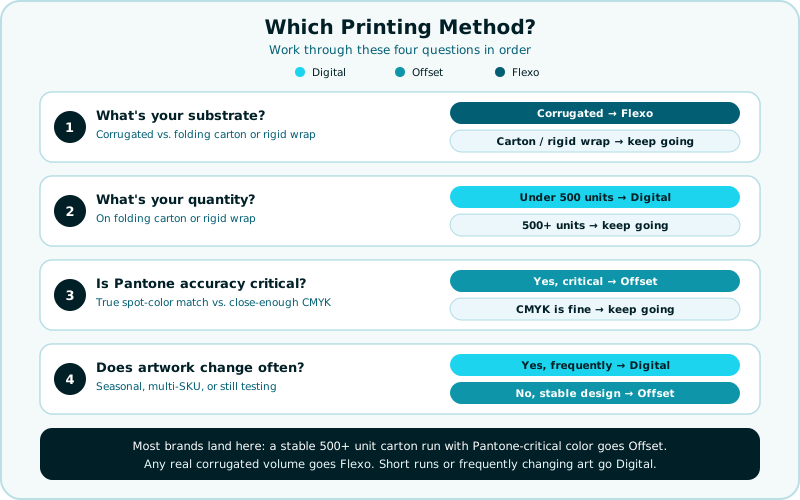
Work through these four questions in order.
- What is your substrate? Corrugated at any volume points to flexo. Folding carton or rigid wrap goes to offset or digital.
- What is your quantity? Under 500 units, digital. Over 500 units on folding carton, offset. Over 1,000 units on corrugated, flexo.
- How critical is Pantone accuracy? If critical, offset. If close-enough CMYK is acceptable, digital works.
- How often does your artwork change? Frequently changing artwork (seasonal, multi-SKU, testing phases) favors digital to avoid repeated plate charges.
For most brands ordering product boxes in the 500 to 2,000 unit range with stable artwork, offset is the right call. For brands just starting out or ordering samples, digital gets you to market without committing to plate costs. For anything on corrugated, flexo is the default.
Detailed finishing options including matte laminate, gloss, soft-touch, and UV spot coating apply across all three methods. Review them on the printing and finishing page to understand what is compatible with your chosen method and substrate.
Printing method questions we hear most
What file format and bleed setup do I need before sending artwork? Send vector artwork (AI, EPS, or PDF) at full production size with at least 0.125 inch of bleed on every edge, plus a safe zone that keeps text and logos clear of the trim line. Offset and digital both want the same basic setup; the difference is that offset also needs each spot color flagged and converted to its own plate. Our guide to designing custom boxes covers dieline and bleed requirements in full.
What minimum order quantity makes offset worth the plate cost? Plate cost is the fixed expense offset has to earn back before its lower per-unit rate pays off. On most folding carton jobs, that crossover lands around 500 units, matching the sweet-spot table above. Below that, digital's zero setup cost usually wins on total spend. Our guide to minimum order quantities covers how minimums vary across box styles.
Which printing method works best for a die-cut window box? Window boxes are typically folding carton with a die-cut opening, so offset and digital both apply the same way they do to any other folding carton job. Die-cutting happens after printing, so it does not change your method choice. It does mean your artwork needs to account for where the window cuts through the design, which your dieline proof will show clearly.
Get a Quote with a Free 3D Mockup
Once you know your box format, quantity, and color requirements, the fastest way to validate your decision is a quote with a free 3D mockup. You see the design on your actual box structure before any plates are made or any production run begins. Quote responses come back within 48 business hours.
Request your quote at /get-quote. If you want to hold a physical sample before committing to a full run, order a sample and the sample fee credits toward your first production order.


