Ecommerce packaging is the only physical thing your customer touches before deciding whether to leave a review, share an unboxing, or send the product back. It is the single most underused marketing asset in most DTC brands. This guide breaks down what works.
The two jobs of ecommerce packaging
Ecommerce packaging has to do two jobs at once and they pull in different directions.
Job one is protection. The package has to arrive intact after riding on a truck, a conveyor belt, and a delivery driver's seat. Damaged products generate refund requests, support tickets, and one star reviews. Protection is the floor, not the ceiling.
Job two is delight. The package has to create a moment the customer wants to talk about. A reel, a story, a tweet, a review. Delight is the upside, not a nice to have.
The cheap path optimizes for job one and skips job two. The expensive path optimizes for job two and over-builds job one. The right path picks the smallest, sturdiest box that fits the product, then layers branding on top to create the moment.
Shipping durability that actually matters
Most packaging damage in ecommerce happens at three points: in the conveyor belt at the fulfillment center, in the back of the delivery truck, and at the final delivery doorstep.
Three specific decisions reduce damage by 60 to 80 percent without much extra cost.
Choose the right corrugated grade
E-flute corrugated handles products under 5 lbs reliably. B-flute handles 5 to 15 lbs. Heavier than 15 lbs needs C-flute or double wall.
We see brands shipping 8 lb products in E-flute mailers because E-flute is cheaper and they ordered before talking to a packaging engineer. The result is crush damage on roughly 5 to 10 percent of orders.
Switching to B-flute on the same size mailer increases material cost modestly and cuts crush damage sharply. For any product with real weight or fragility, the tradeoff pays for itself in avoided replacements and support tickets.
Right size the box
A product rattling around inside a too-large box is the second largest source of damage. Boxes that are oversize by more than 2 inches on any dimension see roughly 3 times the damage rate of properly sized boxes.
Custom sizing your box to within half an inch of the product on each side eliminates this entirely. It also drops shipping cost through DIM weight reduction.
Add void fill that matters
Loose fill peanuts and crumpled kraft paper protect heavy items. Air pillows protect light items. Tissue paper protects fragile items at the cost of protection.
Mistake we see often: brands use tissue paper for fragile items because tissue paper feels premium. Tissue does nothing for impact protection. Use molded pulp inserts or die-cut foam for fragile items. Use tissue paper for branding inside an already-protective box.
The unboxing experience
Once the package arrives intact, the unboxing moment determines whether the customer becomes a repeat buyer or a one-and-done.
The most effective unboxing moments share three components.
Inside print on the mailer
The inside of the mailer is real estate that ships free. When the customer pops the box open, they see your brand color, your message, or a piece of art.
Inside printing adds a meaningful percentage to per unit cost, since the print runs through a second pass on the press. The payback shows up in social shares and repeat visits to the product page, the kind of attention a plain brown box never earns.
Branded tissue paper
Tissue paper does not protect the product but it transforms the visual moment. Plain kraft tissue feels artisan. Custom printed tissue feels luxury. Either choice signals intentionality versus indifference.
Branded tissue is one of the least expensive upgrades in the entire unboxing kit relative to the difference it makes in the unboxing moment.
An insert card
The insert card does the work no other packaging element does. It thanks the customer by name (or as anonymously as a thank you allows), it asks for the review, it offers the discount on the next order, it tells the customer how to use the product correctly.
A well written insert card is one of the highest-leverage pieces in the kit for repeat purchase rate, because it is the one element that talks to the customer directly instead of just looking good. Plain text on a folded printed card. No design genius required.
Branded tape
Branded shipping tape is the cheapest exterior brand statement available. Customers see the tape before they see the box.
Custom printed tape adds only a small amount to per-shipment cost at typical volumes. It signals brand attention from the moment the package hits the doorstep. Brands that ship in plain brown cartons leave this signal on the table.
Sustainable options that customers notice
Sustainability claims on packaging are scrutinized more closely than they used to be. Vague claims like "eco friendly" without specifics now generate skepticism. Specific claims like "FSC certified kraft, 100 percent recyclable curbside" generate trust.
The sustainability moves customers actually notice:
- FSC certification logo printed on the box signals verified sustainable forestry
- Recycled content percentage stated directly ("80 percent post consumer recycled")
- No plastic windows or laminate if recyclability is part of the message
- Compostable packaging tape and tissue for brands going further
The mistake here is greenwashing without specifics. If your brand is going to claim sustainability, back it with verifiable specifics on the box itself.
Cost benchmarks for ecommerce unboxing kits
A complete unboxing kit, mailer box, tissue, insert card, and tape, is one of the more affordable packaging upgrades available, because most of the cost lives in the mailer box itself and every other component adds only a marginal amount on top. As monthly volume climbs past 1,000 units, per unit cost across the whole kit drops, since tooling and plate costs spread across more units.
Run size, print method, and finishing all move the exact total, so we quote it per order rather than publishing a fixed figure here. See how much custom packaging actually costs for a full cost breakdown, or get a quote for your specific volume.
Returns reduction tactics
Damage reduction was covered above. The other big returns category is "wrong size" or "looks different than the photo." Packaging cannot fix product fit, but it can reduce one common returns trigger: damaged or shabby packaging that makes the buyer doubt the brand.
When the box arrives crushed, when the tape is plain, when the inside is empty cardboard, customers form a subtle negative association with the brand. They expect the product to match the packaging. A premium product in cheap packaging triggers "is this fake?" doubt.
Investing in unboxing kit consistency pays back in lower returns even before the unboxing video pays back in social shares.
How to brief a packaging supplier for ecommerce
Send your supplier the following at quote stage:
- Product photos with dimensions called out
- Average shipping weight including product, packaging, and dunnage
- Your monthly volume and forecast trajectory
- Your unboxing reference brands (3 to 5 you want to feel similar to)
- Your brand colors in Pantone or hex
- Your sustainability commitments if any (FSC, recycled content, no plastic)
This briefing lets the supplier recommend the right material, size, and finishing without back and forth.
The order of operations
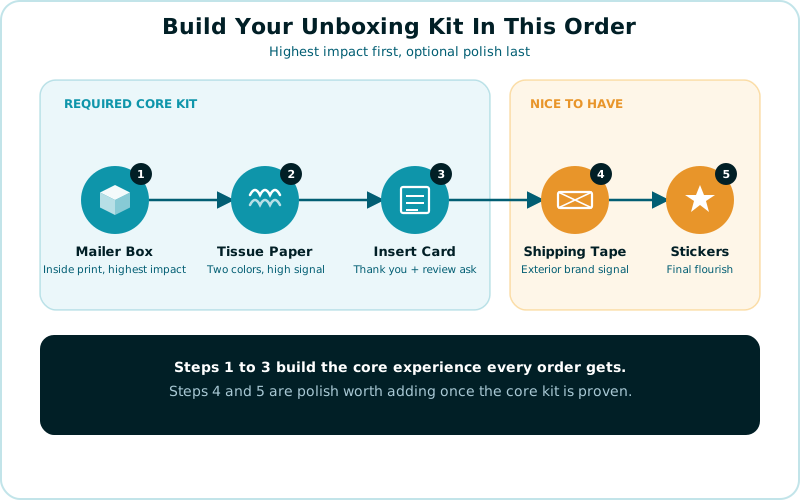
If you are building an ecommerce packaging program from scratch, here is the order that maximizes ROI:
- Custom printed mailer box with inside print (highest impact)
- Branded tissue paper in two colors (lowest cost, high signal)
- Custom insert card with thank you and review ask (drives repeat purchase)
- Custom printed shipping tape for exterior brand signal
- Custom stickers or branded stamps for the final flourish
Steps 1 to 3 are required. Steps 4 and 5 are nice to have once you have proven the core kit works.
What this looks like at scale
A brand shipping several thousand units a month who invests in the full unboxing kit is typically trading a small increase in per-unit packaging cost for a meaningful lift in repeat purchase rate and customer-generated content. The exact return depends on your margins, your average order value, and how much of your growth already comes from repeat customers versus new acquisition.
Most brands find the payback lands within a few months of the switch, once repeat purchases and referral traffic from social content are accounted for. If you want to model the numbers for your own volume, request a quote and we will help you compare kit tiers against your current packaging spend.
A few more questions before you build your kit
Should I ship multi-item ecommerce orders in a mailer box or a shipping carton? A mailer box works well for a single hero product where the branded exterior does double duty as shipping protection. Once an order includes multiple SKUs, or the combined weight climbs past a few pounds, a shipping carton as the outer layer protects better and stacks more predictably in transit. See our mailer box versus shipping carton comparison for the full decision.
What insert type should I use for fragile ecommerce products? Molded pulp and die-cut foam protect against impact. Paperboard inserts and dividers control movement for multi-item kits but do not absorb shock the way foam or pulp do. Tissue paper is a branding layer, not a protective one, so pair it with real cushioning rather than using it alone. Our guide to choosing packaging for fragile products covers insert selection by product type.
What size box should I use to avoid dimensional weight surcharges? Carriers bill by dimensional weight when a box is larger than the product needs. Sizing your box within half an inch of the product on each side keeps the shipped dimensions close to the actual product size, which is usually the fastest way to bring DIM weight charges down. Our measuring guide walks through getting those dimensions right before you order.
Get a quote for your unboxing kit
Send us your product, your volume, and your three reference brands. We will spec the entire unboxing kit and send you a quote with free 3D mockups within 48 hours.